
Decoding the Economics of Climate Change Mitigation in Developing Nations
- Nottingham Economics Society

- Feb 26, 2025
- 6 min read
By: Nuraiah Binte Farid
Climate change is one of the most pressing challenges of our time, and its impacts are felt globally. However, the burden of addressing climate change is not evenly distributed. Developing nations, which often have limited resources and infrastructure, face unique challenges in mitigating climate change. This essay explores the economics of climate change mitigation in developing nations, focusing on the financial, social, and policy dimensions. It examines the role of international cooperation and technology transfer in supporting these countries. By understanding the economic dynamics, we can better address the barriers and opportunities for effective climate action in the developing world.
The Economic Challenges of Climate Change Mitigation in Developing Nations
Developing nations are often more vulnerable to the impacts of climate change due to their geographic location, reliance on climate-sensitive sectors like agriculture, and limited adaptive capacity. At the same time, these countries face significant economic challenges in implementing mitigation strategies. Mitigation refers to efforts to reduce or prevent the emission of greenhouse gases (GHGs), which are the primary drivers of climate change.
One of the main economic challenges is the high cost of transitioning to low-carbon technologies. For example, shifting from fossil fuels to renewable energy sources like solar or wind requires substantial upfront investment. Developing nations often lack financial resources to fund such transitions. According to the International Energy Agency (IEA), the cost of renewable energy infrastructure in developing countries can be prohibitively high, especially when compared to their GDP (IEA, 2021). This financial gap is a major barrier to effective climate action.
Another challenge is the opportunity cost of prioritizing climate mitigation over other pressing needs. Many developing nations struggle with poverty, inadequate healthcare, and education systems. Allocating limited resources to climate mitigation can be seen as a trade-off against these immediate social and economic priorities. For instance, the government may have to choose between building a new hospital or investing in a solar power plant. This dilemma highlights the complex economic decisions that developing nations must navigate.
The Role of International Financial Support
Given the financial constraints faced by developing nations, international financial support is crucial for enabling climate change mitigation. Developed countries, which have historically contributed the most to global GHG emissions, have a moral and practical responsibility to assist developing nations in their mitigation efforts. This support can take various forms, including grants, loans, and investments in green technologies.
The Green Climate Fund (GCF), established under the United Nations Framework Convention on Climate Change (UNFCCC), is one of the key mechanisms for providing financial assistance to developing countries. The GCF aims to support projects that promote low-emission and climate-resilient development. However, the fund has faced criticism for not meeting its financial targets and for delays in disbursing funds (GCF, 2020). This underscores the need for more reliable and substantial financial commitments from developed nations.
In addition to multilateral funds, bilateral agreements between developed and developing countries can also play a significant role. For example, the United States and India have collaborated on initiatives to promote renewable energy and energy efficiency. Such partnerships can facilitate technology transfer and capacity building, which are essential for effective climate mitigation.
Policy and Governance Challenges
Effective climate mitigation requires robust policy frameworks and governance structures. However, many developing nations face challenges in this area. Weak institutions, corruption, and lack of technical expertise can hinder the implementation of climate policies.
One key issue is the lack of integrated planning. Climate mitigation efforts are often siloed within specific sectors, such as energy or transportation, without considering their broader economic and social implications. For example, a renewable energy project may fail to achieve its full potential if it does not address issues like grid infrastructure and energy access. Integrated planning can help align climate goals with national development priorities and ensure a more holistic approach.
Another challenge is the need for capacity building. Developing nations often lack technical expertise and institutional capacity to design and implement effective climate policies. International organizations and developed countries can support capacity building through training programs, knowledge sharing, and technical assistance. For instance, the United Nations Development Program (UNDP) has been working with developing countries to strengthen their climate governance frameworks (UNDP, 2020).
The Importance of Technology Transfer
Technology transfer is a critical component of climate change mitigation in developing nations. Advanced technologies, such as carbon capture and storage (CCS), smart grids, and energy-efficient appliances, can significantly reduce GHG emissions. However, many developing countries lack access to these technologies due to high costs and intellectual property barriers.
International cooperation is essential for overcoming these barriers. Developed countries can support technology transfer through funding, technical assistance, and policy frameworks. For instance, the Clean Development Mechanism (CDM), established under the Kyoto Protocol, allows developed countries to invest in emission reduction projects in developing nations. In return, they receive carbon credits that can be used to meet their own emission targets. While the CDM has had mixed results, it demonstrates the potential for collaborative approaches to technology transfer (UNFCCC, 2019).
Moreover, local innovation and adaptation are equally important. Developing nations can leverage their unique strengths and resources to create context-specific solutions. For example, Kenya has become a leader in geothermal energy, harnessing its abundant geothermal resources to generate clean electricity. Such homegrown innovations can complement international efforts and enhance the sustainability of climate mitigation strategies.
Social and Economic Co-Benefits of Climate Mitigation
While the primary goal of climate mitigation is to reduce GHG emissions, it can also generate significant social and economic co-benefits. These co-benefits can help justify the investment in mitigation efforts and address some of the trade-offs mentioned earlier.
One major co-benefit is job creation. The transition to a low-carbon economy can create new employment opportunities in sectors like renewable energy, energy efficiency, and sustainable agriculture. According to the International Labor Organization (ILO), the global shift to green economies could generate 24 million new jobs by 2030 (ILO, 2018). In developing nations, where unemployment and underemployment are prevalent, this can have a transformative impact on livelihoods.
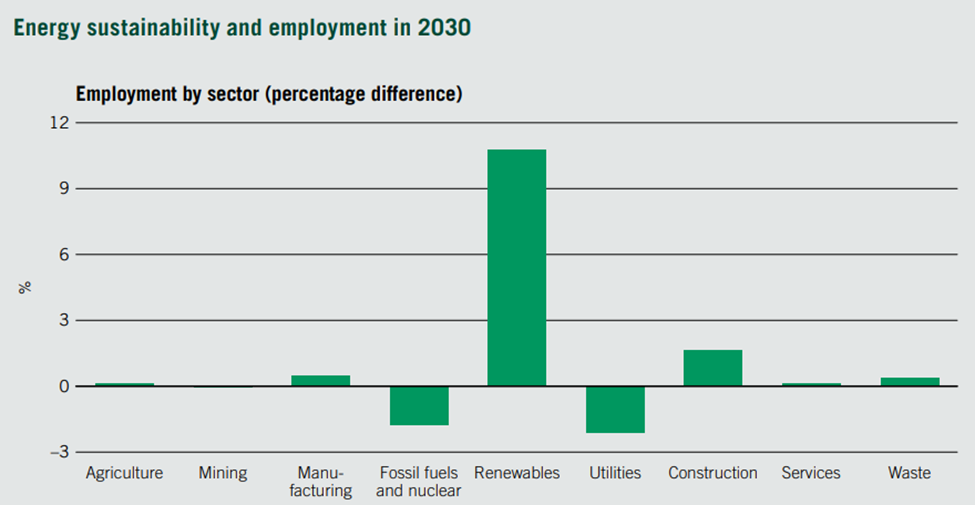
Another co-benefit is improved public health. Many mitigation strategies, such as reducing air pollution from fossil fuels, can lead to better health outcomes. For example, a study in India found that transitioning to renewable energy could prevent over 200,000 premature deaths annually by reducing air pollution (Chakraborty et al., 2021). This highlights the interconnectedness of climate action and public health.
Additionally, climate mitigation can enhance energy security and reduce dependence on imported fossil fuels. Many developing nations rely heavily on oil and gas imports, which can strain their economies and expose them to price volatility. Investing in domestic renewable energy sources can reduce this vulnerability and promote energy independence.
Conclusion
Decoding the economics of climate change mitigation in developing nations reveals a complex interplay of financial, social, and policy factors. While these countries face significant challenges, they also have unique opportunities to pursue sustainable development pathways. International financial support, technology transfer, and capacity building are essential for enabling effective climate action. At the same time, the social and economic co-benefits of mitigation can help address some of the trade-offs and justify the investment. Ultimately, addressing climate change in developing nations requires a collaborative and inclusive approach. Developed countries must fulfill their financial and technological commitments, while developing nations must strengthen their policy frameworks and governance structures. By working together, the global community can ensure that climate mitigation efforts are equitable, effective, and sustainable.
References
Chakraborty, P., Jayaraman, G., & Dey, S. (2021). Health co-benefits of climate change mitigation in India: A case study of renewable energy. Environmental Research Letters, 16(5), 054001. https://doi.org/10.1088/1748-9326/abf1a2
Green Climate Fund (GCF). (2020). Annual report of the Green Climate Fund. Retrieved from https://www.greenclimate.fund/publications/annual-report-2020
International Energy Agency (IEA). (2021). Renewable energy market update: Outlook for 2021 and 2022. Retrieved from https://www.iea.org/reports/renewable-energy-market-update-2021
International Labour Organization (ILO). (2018). World employment and social outlook 2018: Greening with jobs. Retrieved from https://www.ilo.org/global/research/global-reports/weso/green-jobs/lang--en/index.htm
United Nations Development Programme (UNDP). (2020). Strengthening climate governance in developing countries. Retrieved from https://www.undp.org/publications/strengthening-climate-governance-developing-countries
United Nations Framework Convention on Climate Change (UNFCCC). (2019). Clean Development Mechanism (CDM): Key achievements and challenges. Retrieved from https://unfccc.int/topics/mitigation/workstreams/clean-development-mechanism
Climate Action. (n.d.). Global green economy could create 24 million jobs by 2030. Climate Action. https://www.climateaction.org/news/global-green-economy-could-create-24-million-jobs-by-2030



Comments