
Dissecting Budget 2021
- Nottingham Economics Society

- Nov 18, 2020
- 3 min read
Updated: Aug 24, 2023
As COVID-19 cases are increasing and lockdowns are imposed again in Malaysia, Budget 2021 is substantial in terms of how it is going to help the country to pass through this tough period. There is no doubt that Budget 2021 is a difficult one, as the government has huge responsibilities; saving lives and livelihoods. The budget was tabled on 6th November 2020. There will be debates about Budget 2021 as it will determine the direction of the country during the pandemic. This budget is very important for Prime Minister Muhyiddin as well, since he might face a no-confidence vote.
With the new lockdowns, it is very important that the government supports the people who are going to be most affected. The budget is expansionary as the government will continue to spend more money to continue with the pandemic relief. According to the Finance Minister, the increased spending will be used to restart the economy and spend on development expenditure (Lim, 2020). Through increased spreading, there will also be new jobs created. The Finance Minister thinks that increased spending will help the Malaysian economy to recover faster. The budget deficit will be around 5.8 % to 6% of the budget (EY, 2020). Not all is gloomy though, as the economy is expected to grow between 6.5 and 7.5 % next year (Xin Yi, 2020).
As COVID-19 cases are increasing across the country, budget allocation for the health sector in Budget 2021 becomes much more important. In total MOH received RM31.9 billion for Budget 2021 (CodeBlue, 2020). This is a total of 9.9% of Budget 2021 and is a 4.3% increase from 2020. It is very vital for every nation to secure a vaccine of COVID-19. For this purpose, the government has allocated RM3 billion to purchase vaccines. To incentivize pharmaceutical companies to produce vaccines locally, the government has offered an income tax rate of between 0 and 10 % for the first 10 years. Lockdowns have negatively affected the mental state of the public. MOH has received 35,000 calls on its psychosocial hotlines in the period from March till October 2020 (CodeBlue, 2020). For this, the government has allocated RM 24 million to overcome the mental issues. RM1 million has been allocated to overcome the third wave of the pandemic. This will mainly be used on testing supplies and protective gear.
Many family’s livelihoods have been affected due to lockdowns. To counter this government has decided to increase the assistance of the poor families. It has been announced that households with income less than RM2500 and a child will receive RM1200. The increase in assistance has also increased for other categories. Other measures to mitigate the impact of COVID-19 a total of RM45 million of injection has been allocated under a COVID-19 fund (Xin Yi,2020). During the speech, Finance Minister Tengku Dato' Sri Zafrul Abdul Aziz stated that RM6.5 billion worth of cash aid will be given out.
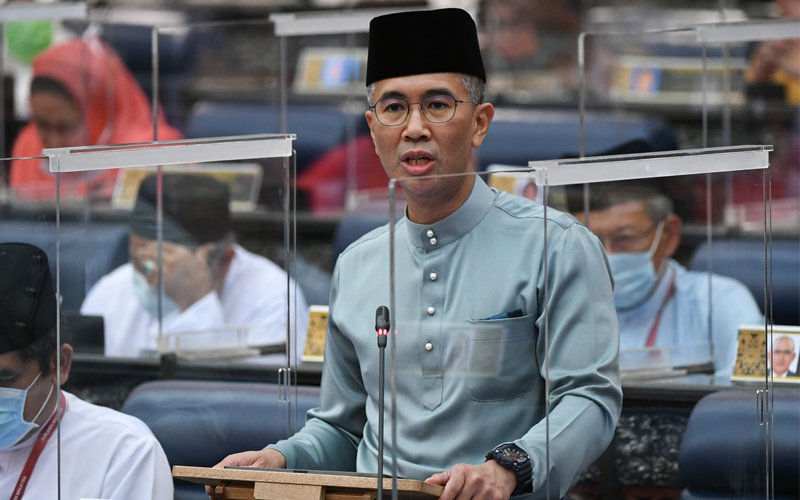
Finance Minister YB Tengku Dato' Sri Zafrul Abdul Aziz during his budget speech.
Source: FreeMalaysiaToday
The controversial part of the budget is the large allocation of money to Jasa. Jasa is a propaganda department under the Communications and Multimedia Ministry. It was set up during Barisan Nasional’ government but disbanded in Pakatan Harapan’s government. RM85.5 million has been allocated for the revival of Jasa. After hearing this, concern was created among the citizens. Their main concern is that the government should not allocate this huge sum of money on propaganda when people are struggling to put food on the table. During the recent debate in parliament opposition leaders have urged the government to shift the money to healthcare and other important sectors that can benefit the citizens. On the other hand, the government has stated that Jasa will be used to promote patriotism and counter false COVID-19 information (Bowie, 2020)
Overall, Budget 2021 looks good on paper but it will be very interesting to look at how the government plans to execute its promises. It is very important that people also hold the government accountable for their promises. The well-being of citizens should be a priority for the government.
About the Author

Suhaib Shaukat
Suhaib is currently doing Foundations at the University of Nottingham, Malaysia. He loves to read about politics and business. He hopes to serve the public in future and wants to become a civil servant in the future. Suhaib also serves at IGNITE (UNM Student Magazine) as a News Editor.



Comments