
What keeps Malaysia’s economy growing?
- Nottingham Economics Society

- Jul 5, 2023
- 4 min read
Updated: Aug 24, 2023
Reviewing Performance
Malaysia recorded exceptional growth of 5.6% in its first quarter GDP of 2023. The strong performance defies claims from economists and wall street experts who are calling for a recession in 2023. In contrast to the GDP numbers of our neighbouring countries, such as Singapore which recorded a gain of merely 0.4%, Thailand 2.7% and Indonesia 5.0%, Malaysia’s performance stands out. This article will examine several aspects which contribute to the strong growth in the Malaysian economy.
Private Consumers’ Spending
According to the statement published by Bank Negara Malaysia (BNM), Malaysia's economy is strongly supported by robust private sector consumption, which was made possible by the improving labour market condition and a recovery in tourism activity. Strong private consumption can be seen in various indicators, such as the number of passenger cars sold, credit card spending data, etc. The diagram below highlights the robust demand for passenger vehicles, which was partly driven higher by the government’s initiative to exempt SST from the midst of covid-19 until March this year. The sales value and annual growth rate of wholesale and retail trade data published by the Department of Statistics Malaysia (DOSM) also showed strength in household spending.

Figure 1: Monthly Total Industry Volume (TIV) from March 2018 - May 2023 Source: Kenanga Research

Figure 2: Sales Value and Annual Growth Rate of Wholesale & Retail Trade, January 2022 - April 2023 Source: DOSM
Moreover, another key driver of the Malaysian economy relies on the recovery of both international and domestic tourism. The statement from BNM expects Malaysia to see a pickup in international tourist arrivals and is prepared to welcome 20 million tourist arrivals in 2023, especially visitors from China. Tourism, which is the export of services, will help to boost the domestic economy and result in a wide spillover effect to benefit the nation. Government’s Investment On the other hand, government-led projects and substantial capital injections have stood well to be a supportive element to the Malaysian economy. Following the MRT 2 (Putrajaya line) which began operation in March this year, two other mega railway infrastructure projects are ongoing concurrently, namely the LRT 3 and MRT 3.
Figure 3 shows the planned route of the LRT 3 that aims to reach out to a greater population in the regions of Shah Alam. Whilst the MRT 3 project creates a loop within Kuala Lumpur to cover the underserved regions. These mega infrastructure projects require investments of billions of Ringgits into the economy, which will result in long and short-term benefits.

Figure 3: Kuala Lumpur’s urban rail network Source: MRT Corporation
A few other ongoing government construction activities such as the East Coast Rail Link (ECRL) connect Port Klang to the other side of Malaysia, Kota Bharu. This project goes through Pahang, Terengganu and Kelantan which is estimated to be completed by 2026. Besides, the construction of the Pan Borneo Highway in Sabah is estimated to cost up to RM16 billion to provide better accessibility to citizens in West Malaysia. Foreign Investment Inflow Looking into Malaysia’s position in international trade and investment, our country registered a net international investment position (IIP) of RM 84.5 billion as of the first quarter of 2023. As shown in the figure below, Malaysia is making its way up from the drop last year. These numbers are well reflected in the Malaysian economy as we have just witnessed multinational corporations (MNCs), such as the chipmaker Texas Instrument that has announced its plan to expand operations in Malaysia, specifically in Kuala Lumpur and Melaka, amounting to an investment of RM14.6 billion.
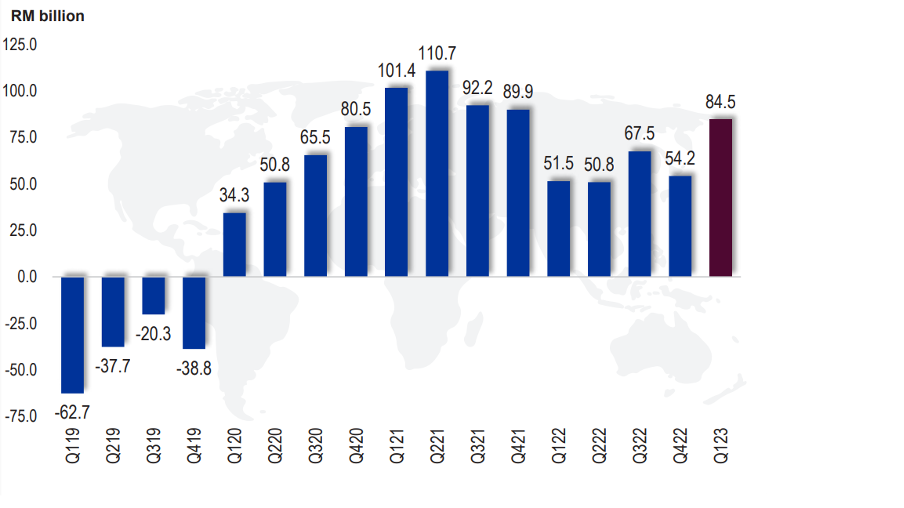
Figure 4: Malaysia’s International Investment Position (IIP) as of first quarter 2023 Source: DOSM
Penang can be seen as one of the best-performing states in attracting foreign businesses to operate and set up manufacturing plants. To list a few, Intel, AMD, and Lam Research made their presence in Penang, providing tremendous job demand and opportunities for knowledge transfer. With more high-tech industries setting up production plants in Malaysia, this contributes to Malaysia’s effort in breaking out from the middle-income trap and moves towards exporting high-value-adding goods and services.
Future Development of Malaysia Moving forward, the government has stressed the importance of targeted subsidies as an approach to reduce unbalanced fiscal spending. Malaysia has enjoyed an inflation rate that is lower than others in the region through subsidising most essential products. However, the higher income group will start to see changes in many subsidised items, for instance, electric prices will be at least 25% higher for those who spend more on their utility bills. Additionally, the government is exploring ways to reduce expenditure on subsidising petrol by launching targeted subsidies.
In conclusion, Malaysia’s economy is progressing positively forward from the aftermath of the Covid-19 pandemic and an uncertain global outlook. The inflation rate has been on a downtrend while relative political stability has encouraged plenty of foreign investment and created an encouraging business environment. I believe Malaysia holds great promise in the coming future backed by the mentioned factors, robust private consumption, a continuation of government spending and strong foreign direct investment.
Article was prepared by Khor Zher
Reference:



Comments