
The Malaysian Higher Education Dilemma
- Nottingham Economics Society

- Sep 11, 2024
- 11 min read
Students from ethnic minorities crying unfairness about public pre-university and degree intakes has become an annual issue for a long time. In 2022, 200 straight-A Indian students were rejected from the Matriculation program, according to its quota intake of 90:10, where 90% of seats are reserved for Bumiputera students (Lee, 2022). In 2024, the student union of Universiti Teknologi Mara (UITM) were criticised for protesting against the admission of non-bumiputera students in the cardiothoracic surgery postgraduate programme, since UITM is 100% reserved for Bumiputera students (Shahabudin, 2024).
June 30th seemed like a breath of hope for minorities when Prime Minister Anwar Ibrahim guaranteed spots in the Matriculation programme for all SPM students with 10As and above regardless of race, while simultaneously maintaining the bumiputera quota of 90:10 (Hassan, 2024). While that seemed as a good policy shift, some groups such as PAGE and LFL, criticised the idea, deeming it meaningless as non-bumi students with straight As would have already secured their spots under current quota system, regardless of the announcement (MalaysiaNow, 2024).
However, this yearly cycle of crying foul over intake into the public tertiary system and politicians from different parties calling for an end to racial quota system, may not present the full and deeper picture on the structural flaws of Malaysia’s higher education sector.
Malaysian Public Education Structure and History
Malaysia has 4 main pre-university pathways such as, the 1 or 2 year matriculation programs, a 1.5 year Form 6 program at government schools, a 1 year foundation program in 13 public universities, and finally, a 3 year diploma programme at polytechnics. Moving to degree programs, Malaysia has 20 public universities, 36 polytechnics, 105 community colleges and 434 private education institutions (see Figure 1).
Matriculation is a pre-university programme, lasting 2 semester (Program Satu Tahun) or 4 semester (Program Dua Tahun, where it’s divided to Science, Accounting, Professional Accounting (for bumiputera students only) and Engineering streams, and conducted in matriculation colleges in each state (EduAdvisor, 2024).
Form 6 is a 18 months, pre-university programme for students to undertake Sijil Tinggi Pelajaran Malaysia, where it’s divide into mainly science and arts stream, and is conducted in secondary schools (EducAdvisor, 2024).
ASASI, a 1 year foundation program administered directly by 13 out of 20 public universities (IPTAs), where courses provided differ among each university. Some courses are science, engineering, law, TESL, medicine and etc (MYGov, 2024)
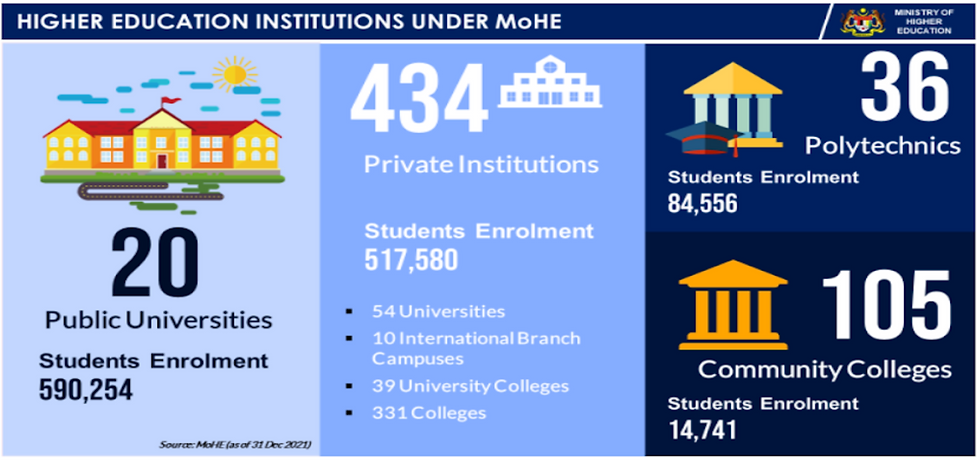
Figure 1: Higher Education Landscape under MOHE
Source: MOHE, 2022
Based on the Twelfth Malaysia Plan, the majority of post-secondary students enrolled into Form 6 program with 68,064 students, while matriculation programmes had 26630 students, although total seats for this program is 40,000 students (Economic Planning Unit, 2021). The intake into public pre-university programs and degree programs in IPTA are decided through a centralised online application process known as UPU in which applicants are offered spots based on a meritocratic system, where a weightage of 90% is assigned for academic results and 10% for co-curricular activities.
IPTA stands for Institut Pengajian Tinggi Awam, also known as a Public University
Unit Pengambilan Universiti (UPU), is a centralised platform to administer the intake for all public pre-university programmes and intakes into degree programmes for all 20 public universities, where offers for courses are provided to applicant based on merit system, weighting 90% on academic results, 10% on co-curricular activities (EduAdvisor,2024).
Flaws of The Higher Education System
Why would students fret upon being rejected from matriculation, when there are other alternatives such as STPM, ASASI or even diploma pathways? Well the answer exposes one of tertiary education flaws, which is the fragmented pre-university programme structure. Despite having limited 40,000 seats in matriculation while Form 6 programmes have larger enrollment size (68064 students), Matriculation provides an easier pathway to enter public universities. 96.9% of Matriculation students entered IPTA compared to only 73.4% of STPM students, based on the 2018-2019 academic year (Hakim, 2019).
It is an unwritten rule that the Matriculation program is a preferred choice as it is a much easier pathway than STPM, since the aim of this program was to assist Bumiputera students in enrolling into public universities, according to academician Teo Kok Seong (Kaur, 2019). Hence, if one pathway is deemed a much easier option than the other, the issue of limited seats in matriculation, coupled with the racial quota of 90:10 poses an early challenge for students on their application into degree programs in public universities.
This brings to the second major flaw in the system, which is the UPU meritocratic application system. The application into pre-university and degree programs for public education is done through UPU system, where students are provided choices of programs available to them based on a meritocratic assignment, where academic marks are given 90% weightage and co-curricular are given 10% (Afterschool, 2021). This was proposed as a fairer system in 2003, shifting away from quota policy of 55% for bumiputera students and 45% for non-bumis in IPTA (Khalid, 2014).
Was it really fair? Economist Abdul Khalid mentions, although Chinese and Indian students benefited initially from merit-based intake, bumiputera population sustained the top spot back in 2013, comprising 74.3% of the intake (Khalid, 2014). However, he pointed out that beneficiaries are most likely urban and ‘rich kids’ compared to rural and poorer students, since they have a higher chance of scoring better grades. This centralised meritocratic system of assessing applicants based on academic and co-curriculum activities ignores socioeconomic background such as their parent’s education level, household income or even student’s access to internet or good quality education itself.
While the remaining quota system may hinder opportunities for non-bumiputera students, the meritocratic intake system has not benefited bumiputeras either. From 2000-2010, non-bumiputera saw an increase in admissions to IPTAs by 61% while bumiputera had increased in admissions by 27% (Khalid, 2014).
Last but not least, the most major hidden issue in the public tertiary education sector, would be its limited supply of seats due to underfunding and privatisation policies. In 2021, out of nearly 1.2 million undergraduate students, public higher education had only 57.1% or 590,254 students enrolled, while the private sector had 42.8% of students enrolled (see Figure 2).
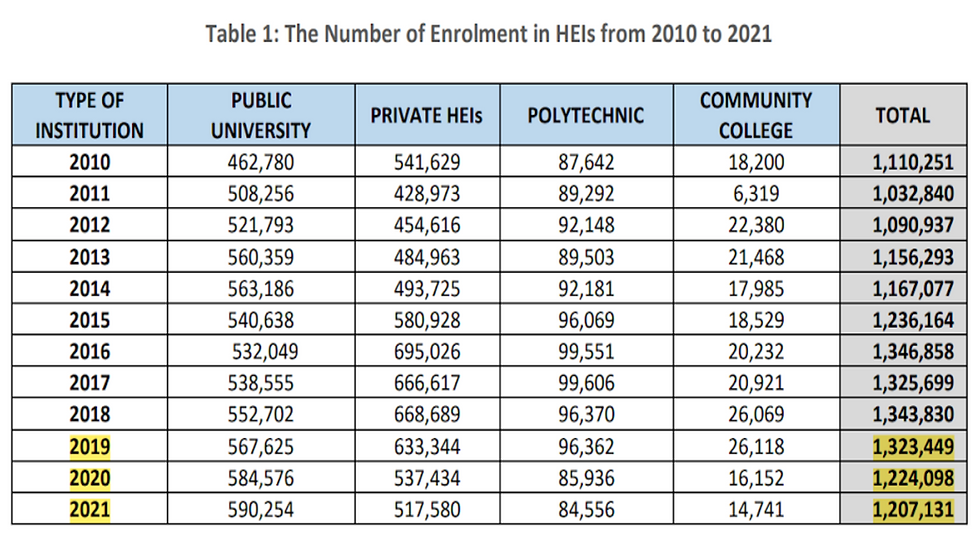
Figure 2: Enrollment in HEIs form 2010 to 2021
Source: MOHE, 2022
The yearly intakes into public universities have increased from 164,989 to 177,720 students since 2016, while private universities had their intakes reduced to 165,158 students in 2020 (see Figure 3). Despite these numbers, the public tertiary sector has a capacity of only enrolling nearly 60% of entire undergraduate students, while for primary and secondary education, the capacity of enrolling students is nearly universal at 97.4% and 94% respectively (EPU, 2021). This could be attributed to the underfunding of public tertiary education where government expenditure decreased from 2.55% of GDP in 2004 to merely 0.95% of GDP in 2019 (tradingeconomics,2024). In 2024, Malaysia expenditure on public tertiary education stands at RM 10.92 billion, roughly 0.69% of GDP (MOF, 2023).
Since the end of the 90s, with the liberalisation of the tertiary education sector following passing of Private Higher Educational Act 1996, tax incentives were provided to induce growth of local private universities, increasing till 704 institutions in 2000 (Sivalingam, 2006). With PTPTN Incorporated in 1997, public financing of IPTA has declined since 2007, where government allocation covered merely 70% of education cost, while budget cuts were made in 2017, with a decrease from RM 7.5 billion to RM 6.12 billion (Abdullah, 2017).
National Higher Education Fund (PTPTN) was incorporated in 1997, to reduce reliance on state funding for higher education, ans shift towards student loan financing, where RM 62.5 billion has been disbursed since 1997, to 3.5 million borrowers (Ooi, Ahmad, Omar, 2021).
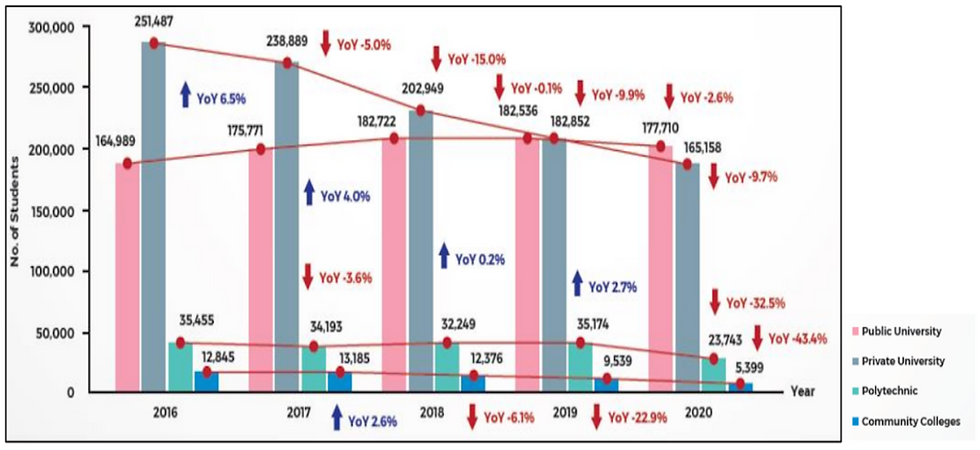
Figure 3: Key Higher Education Intake Indicators (2016-2020)
Source: MOHE, 2022
Policy suggestion
Overcoming Malaysia’s public higher education issues requires unorthodox policy ideas, such as massively investing and subsidising tertiary education to ensure subsidised public universities are universally accessible. Expanding the supply of affordable tertiary education across public and private institutions, ensures students have equitable access to higher education after SPM. By increasing government funding on tertiary education, ideally the overall student enrollment into a subsidised higher education institution should increase from current 57% to nearly 90 or 95% (MOHE,2022).
But how can it be done? Firstly, the cost of public tertiary education would be RM 15,087 yearly while private education costs RM 33,799 yearly, on average, for all types of private institutions (see Appendix 1). Hence, an annual bursary grant of RM 24,803 should be provided to all students pursuing tertiary education in public and private institutions, which requires a RM 29.9 billion subsidy rather than the current RM 10.9 billion (MOHE, 2023). With RON95 subsidy rationalisation, an estimated savings of RM 15 to 17 billion together with RM 10.9 subsidy allocation in budget 2024, can help fund and expand the supply of affordable tertiary education in IPTA, IPTS, polytechnics and community colleges (Tay, 2023).
An annual education bursary grant which covers 100% of tuition fees should be provided to students directly via PTPTN, rather than funding higher education institutions itself, as to enable students freedom to choose their pathways in the public or private sector. Furthermore, a sustainable long term policy to fund tertiary education would be setting up a non-taxable education fund, where all parents are mandated to contribute to the fund until their children reach 18 years old, as suggested by Abdul Khalid (Khalid, 2014).
Economist Abdul Khalid suggested setting up a universal non-taxable education savings account where the government provided matching grants for every dollar saved by low-income families, where subsidy is provided on a sliding scale based on households income (Khalid, 2014).
Subsidising and expanding the supply of tertiary education is one main policy suggestion, however the structure of Malaysian pre-university programmes and the UPU system should be reformed as well. One way will be to restructure meritocratic UPU system by factoring in applicants’ socioeconomic background. The flaw of the current admission system is, it assumes meritocracy is perfect under the assumption that Malaysia’s education system provides all students an equal playing field. However, that isn’t the case. CEO of Teach for Malaysia, Chan Soon Seng mentions how low income students face more barriers to accessing quality education as compared to high-income students (Chin, 2022). Furthermore, ISIS Malaysia shows that lack of access to stable Internet services due to 36.9% students not possessing digital devices for online learning during the pandemic posed a barrier to students from various geographical locations, especially states with low broadband penetration rate (Azahar, 2022).
Hence, a more holistic tertiary admission system should factor in students socioeconomic background, by assigning weightage to household income per capita, which helps capture the effect of student’s household sizes. Lee Hwok Aun, a senior fellow at ISEAS Yusof Ishak Institute proposes a system which balances between students academic ability and socioeconomic background, where the admission system is decentralised to higher education institutions (Lee, 2022). The admission process would have a few rounds, first focusing on a student's academic achievement, while the second round of admission focuses on socioeconomic factors like parent’s education, family income or housing situation (Lee, 2022). The current automated, centralised, meritocratic-focused UPU system should be reformed into the system suggested above and be administered for pre-university and degree admission programs.
The issue of discrimination of non-bumiputera students due to racial quotas in pre-university pathways should be settled by revamping Matriculation, Form 6 and ASASI programs into a single programme. As suggested again by Lee, these programs, especially STPM and Matriculation, should be restructured to be more rigorous and prepare students for higher education, by inculcating critical thinking and communication skills (Lee, 2022). Quotas within this pre-university pathway can be abolished as not only will degree programs be universally accessible due to higher public spending, but also the new programme provides an equal playing field among students from all ethnicities. Hence, the incentive for having quotas to ensure poor bumiputera students enrol into affordable degree programs would no longer be needed if access to tertiary education is affordable in public and private sectors.
Education is a basic right, and every student should have access to education starting from pre-school to tertiary education. The racial quotas in Matriculation programs and quotas in universities like UITM for bumiputera students, plays one part of the larger, systemic issue in Malaysia’s higher education system. Restructuring the three main pre-university pathways into a single programme, considering socioeconomic backgrounds in UPU admissions process, and expanding supply of affordable tertiary education through government spending are three policy ideas that could overcome discrimination faced by minorities and ensure everyone has fair access to education after SPM.
Appendix
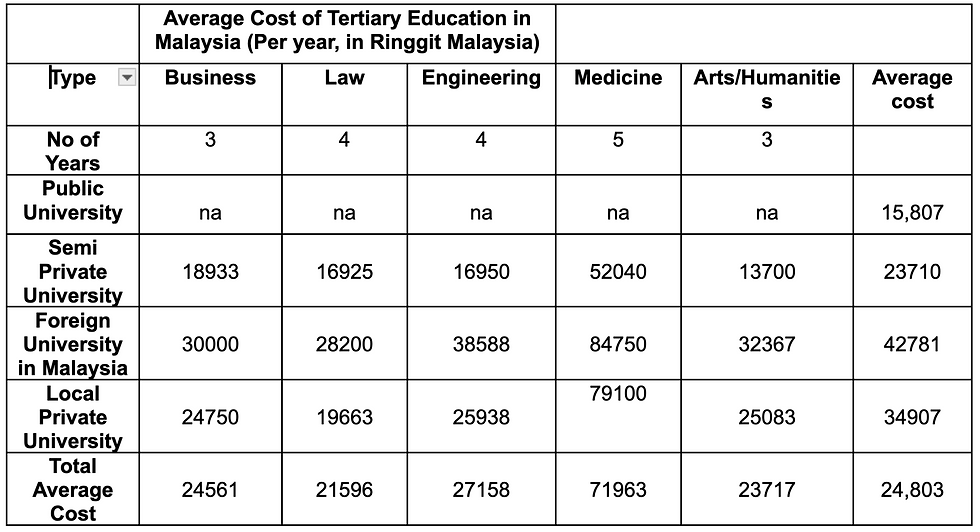
Table 1: Average cost of tertiary education in Malaysia
Source: Author’s own calculation
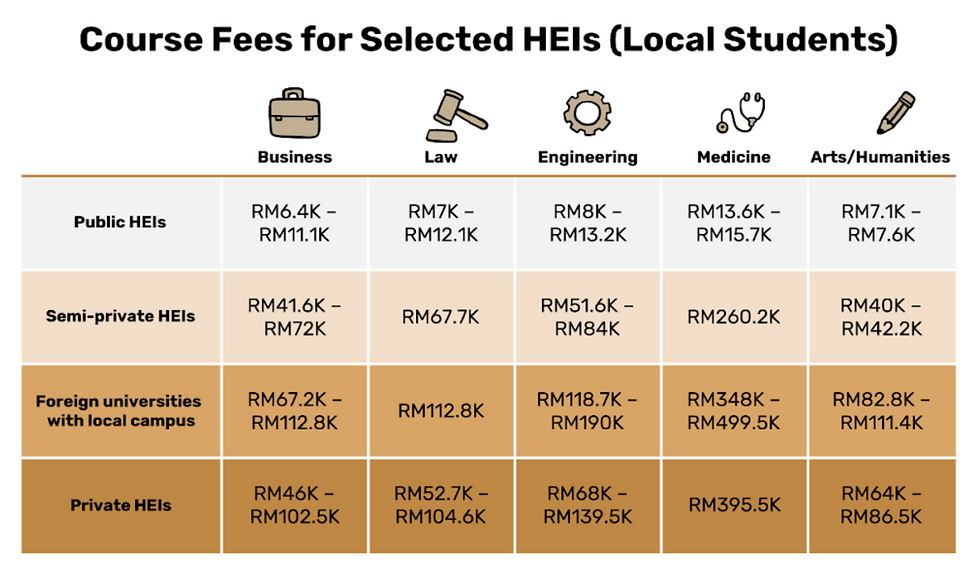
Table 2: Course Fees in Selected Higher Education Institutions for local students
Source: TheCentre, 2019
The calculation for the annual bursary grant, RM 24803, is to help cover the average cost of tuition fees for undergraduate students in both public and private universities. For public university, IPTA, the figure RM 15,087 is taken by calculating RM 10.9 billion subsidy provided in the operational expenditure allocation for Ministry of Higher Education, given to all 20 public universities, polytechnics, community colleges and dividing by the overall student enrollment in public sector, which is 1,207,131 back in 2021.
For the average cost of private university tuition fees, the author calculates the average tuition fee cost from The Centre(2019) article, taking the data from semi-private, local private and foreign branch universities in Malaysia. The cost of tuition fees from all 3 categories are averaged around 5 main degree courses mentioned in the table. The average tuition cost in private sector amounts to
RM 33,799.33 on average.
Therefore, the average tuition cost of RM 15,087 and RM 33,799.33 from public and private tertiary institutions are summed up and divided by 2, giving the figure RM 24,803 per student.
Written by Kishenaendra Devindran, Economics Undergraduate at the University of Nottingham Malaysia.
References
1. Abdullah, D (2017) Public Universities and Budget Cuts in Malaysia. [online]. Available at: file:///C:/Users/60123/Downloads/NES%20RESEARCH/nadams,+Abdullah+upload.pdf [Accessed 13 August 2024].
2. Afterschool.my (2021) Meritocracy Method Determines the Fate of UPU Applicants! [online]. Available at: https://afterschool.my/articles/meritocracy-method-determines-the-fate-of-upu-applicants [Accessed 13 August 2024].
3. Azahar, S (2022) Narrowing educational inequality - Malaysia’s perspective. [online]. Available at: chrome-extension://efaidnbmnnnibpcajpcglclefindmkaj/https://www.isis.org.my/wp-content/uploads/2022/06/NEAT_Narrowing-educational-inequality-in-Malaysia.pdf [Accessed 13 August 2024].
4. Chin, C (2022) Education equality key to unlocking potential of young Malaysians. The Star. (no date). [online]. Available at: https://www.thestar.com.my/news/education/2022/09/25/education-equality-key-to-unlocking-potential-of-young-malaysians [Accessed 13 August 2024].
5. Economic Planning Unit (2021) Twelfth Malaysia Plan 2021-2025, A PROSPEROUS, INCLUSIVE SUSTAINABLE MALAYSIA. Putrajaya: Economic Planning Unit. Available at: file:///C:/Users/60123/Downloads/NERP%20Report/Twelfth%20Plan%20Document.pdf [Accessed 13 August 2024].
6. EduAdvisor (2024) The Complete Guide to Studying Matrikulasi in Malaysia [online]. Available at: https://eduadvisor.my/course-guide/matrikulasi [Accessed 13 August 2024].
7. EduAdvisor (2024) The Complete Guide to Studying STPM in Malaysia. [online]. Available at: https://eduadvisor.my/course-guide/stpm [Accessed 13 August 2024].
8. EduAdvisor (2024) The Ultimate Guide to UPU Application. [online]. Available at: https://eduadvisor.my/articles/ultimate-guide-upu-application [Accessed 13 August 2024].
9. Hakim, A (2019) Is it easier to enter public universities as a matriculation grad than STPM grads?. The Rakyat Post. July 5. [online]. Available at: https://www.therakyatpost.com/news/malaysia/2019/07/05/is-it-easier-to-enter-public-universities-as-a-matriculation-grad-than-stpm-grads/#:~:text=Data%20from%20the%202018%2D2019,compared%20to%20their%20STPM%20counterparts.&text=According%20to%20the%20ministry%C3%A2%E2%82%AC,go%20through%20the%20matriculation%20system. [Accessed 13 August 2024].
10. Hassan, H (2024) Anwar govt promises pre-U spots for high-achieving non-Malays, but racial quotas remain. THE STRAITS TIMES. July 3 [online]. Available at: https://www.straitstimes.com/asia/se-asia/malaysia-promises-pre-university-spots-for-high-achieving-non-malays-but-racial-quotas-remain [Accessed 13 August 2024].
11. Kaur, M (2019) Matriculation an easier path to public universities than STPM, says don. FreeMalaysiaToday. April 24. [online]. Available at: https://www.freemalaysiatoday.com/category/nation/2019/04/24/matriculation-an-easier-path-to-public-universities-than-stpm-says-don/ [Accessed 13 August 2024].
12. Khalid, M.A. (2014) The Colour of Inequality: Ethnicity, Class, Income and Wealth in Malaysia. 1st ed. Selangor, Malaysia: MPH Group Publishing Sdn Bhd.
13. Lee, H, A (2022) Unfair matriculation and university admissions: From reaction to solution. MalaysiaNow. October 7 [online]. Available at: https://www.malaysianow.com/opinion/2022/10/07/unfair-matriculation-and-university-admissions-from-reaction-to-solution [Accessed 13 August 2024].
14. MalaysiaNow (2024) 'Meaningless and deceitful': Anwar slammed over 'guaranteed' matriculation spots for non-Bumis. MalaysiaNow. July 2 [online]. Available at: https://www.malaysianow.com/news/2024/07/02/meaningless-and-deceitful-anwar-slammed-over-guaranteed-matriculation-spots-for-non-bumis [Accessed 13 August 2024].
15. Ministry of Finance (2023) Kementerian Pendidikan Tinggi Maksud Bekalan/Pembangunan 64. Putrajaya: Ministry of Finance. Available at: chrome-extension://efaidnbmnnnibpcajpcglclefindmkaj/https://belanjawan.mof.gov.my/pdf/belanjawan2024/perbelanjaan/BP.64.pdf [Accessed 13 August 2024].
16. MOHE (2022) Higher Education Report: [MALAYSIA] UNESCO National Commission in alliance with [higher education institution(s) or other organisations] [online]. Available at: chrome-extension://efaidnbmnnnibpcajpcglclefindmkaj/https://whec2022.net/resources/Country%20report%20-%20Malaysia.pdf [Accessed 13 August 2024].
17. MyGovernment (2024) Memasuki ASASI [online]. Available at: https://malaysia.gov.my/portal/subcategory/137?language=my [Accessed 13 August 2024].
18. Ooi, K.H., Ahmad, K., Omar, N (2021) Indebted Generation, Part 3 From Student Debt to Individual Educational Accounts [online]. Available at: https://www.centre.my/post/indebted-generation-part-3 [Accessed 13 August 2024].
19. Shahabudin, S (2024) UiTM students protesting non-Bumi admission stuck in the past, says academic. Free Malaysia Today. 19 May [online]. Available at: https://www.freemalaysiatoday.com/category/nation/2024/05/19/uitm-students-protesting-non-bumi-admission-stuck-in-the-past-says-academic/ [Accessed 13 August 2024].
20. Sivalingam, G (2006) Privatization Of Higher Education In Malaysia. [online]. Available at: chrome-extension://efaidnbmnnnibpcajpcglclefindmkaj/https://files.eric.ed.gov/fulltext/EJ1098483.pdf [Accessed 13 August 2024].
21. Tay, C (2023) Govt could save RM15-17b annually by removing fuel subsidies from T20, says Ahmad Maslan. TheEdge. 28 February. [online]. Available at: https://theedgemalaysia.com/node/657124 [Accessed 13 August 2024].
22. TheCentre (2019) The Cost of Higher Education in Malaysia. [online]. Available at: https://www.centre.my/post/the-cost-of-higher-education-in-malaysia [Accessed 13 August 2024].
23. Tradingeconomics (2024) Malaysia - Government Expenditure On Tertiary Education As % Of GDP [online]. Available at: https://tradingeconomics.com/malaysia/government-expenditure-on-tertiary-education-as-percent-of-gdp-percent-wb-data.html [Accessed 13 August 2024].


Comments